
The easiest way to organize a makeup bag is to keep only what you use, group products by step, place tall or frequently used items where they stay visible, and give brushes and small tools their own compartments. The goal is not to create a perfect display. It is to make your routine faster and prevent products from disappearing at the bottom of the bag.
1. Empty the bag and sort everything
Start with a completely empty bag. Put every item on a clean surface, then divide the products into four groups: daily essentials, occasional products, tools and brushes, and items that no longer belong in your routine.
Check dates and condition as you sort. Discard products that have changed smell, texture or color, and remove dried-out formulas, broken tools and anything you no longer use. Follow the product manufacturer's guidance for shelf life and replacement.
2. Build a realistic everyday kit
A useful makeup bag should match your real routine. Choose the base, eye, cheek, lip and finishing products you reach for most often. Keep duplicates and special-event shades somewhere else unless you regularly need them on the go.
If you pack for travel, think in complete looks instead of categories. One base routine, one flexible eye palette and two lip options are often easier to manage than several nearly identical products.

3. Group products by the order you use them
Organizing by application order reduces searching. A simple sequence might be:
- Skin preparation and base products
- Concealer, powder and complexion tools
- Eyes and brows
- Cheeks and highlighter
- Lips and finishing products
Keep products used together close to one another. Small items such as sharpeners, clips and cotton swabs are easier to find in a zip or mesh pocket than in the main compartment.
4. Protect brushes and separate small tools
Brushes should not roll loose among bottles and compacts. A dedicated brush section helps protect bristles and keeps powder residue away from the rest of the bag. Close caps securely and clean brushes regularly according to the maker's instructions.
Use a small pocket for tweezers, lash tools and pencil sharpeners. This makes sharp or narrow items easier to locate and keeps them from catching on softer packaging.
5. Keep products visible
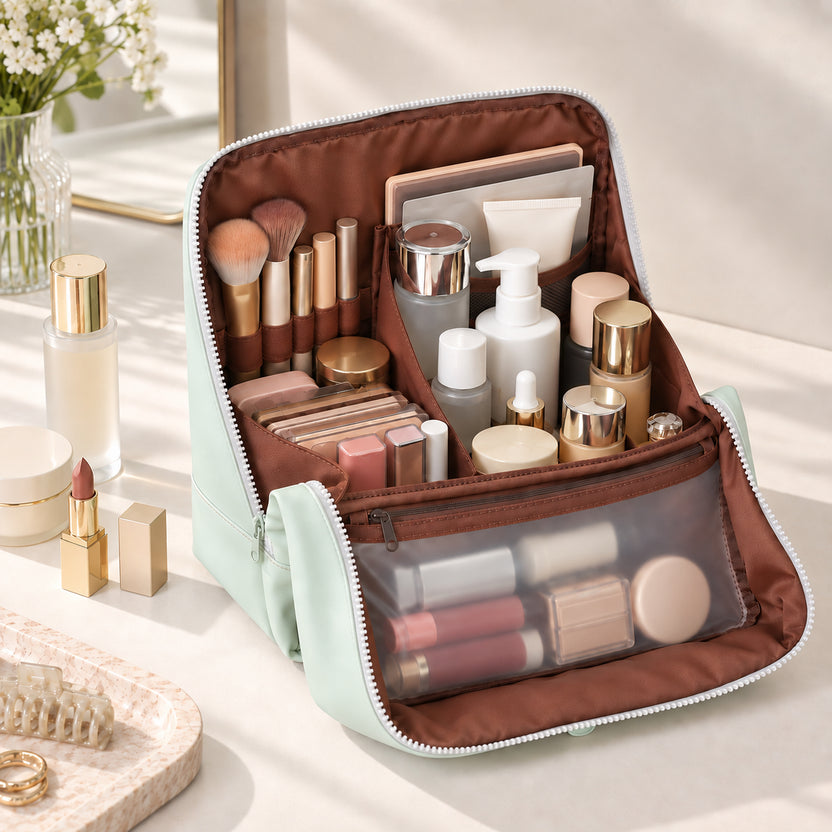
Visibility matters more than having many compartments. When a bag opens wide and stays upright, you can see labels, compare products and return each item to its place. Stand bottles securely when their packaging allows it, and place the products you use most in the easiest-to-reach area.
A removable divider can help you adjust the layout as your routine changes. For example, you can create one area for complexion products and another for color cosmetics, then remove the divider when you need space for a larger palette or bottle.

6. Use a one-in, one-out habit
Once the bag is organized, maintain it with a quick weekly reset. Wipe the interior, return stray products and remove anything you have stopped using. When you add a new everyday product, consider taking out an older duplicate. This prevents the bag from gradually becoming crowded again.
A practical bag layout
For a routine that includes full-size products, look for a design that combines an open main compartment with separate storage for brushes and small essentials. The FOOIKOS Stand-Up Makeup Bag measures 10.6 × 10.6 × 4.7 inches (27 × 27 × 12 cm), includes a removable center divider, dedicated brush storage, interior pockets and a transparent front zip pocket. Its upright format is designed to keep the contents visible on a vanity or while traveling.
Frequently asked questions
How often should I reorganize my makeup bag?
A quick weekly reset is usually enough for an everyday bag. Do a deeper review whenever products start to accumulate or your routine changes.
Should makeup brushes be stored separately?
They do not need a completely separate bag, but a dedicated brush section helps protect the bristles and keeps residue away from other items.
What should stay out of an everyday makeup bag?
Keep bulky backups, rarely used shades and expired or damaged products elsewhere. The everyday bag should contain the items that support your current routine.